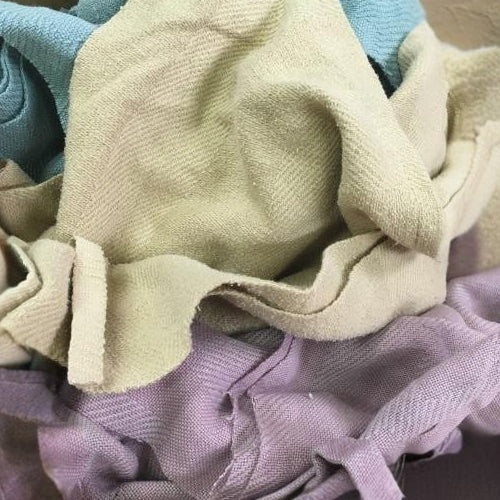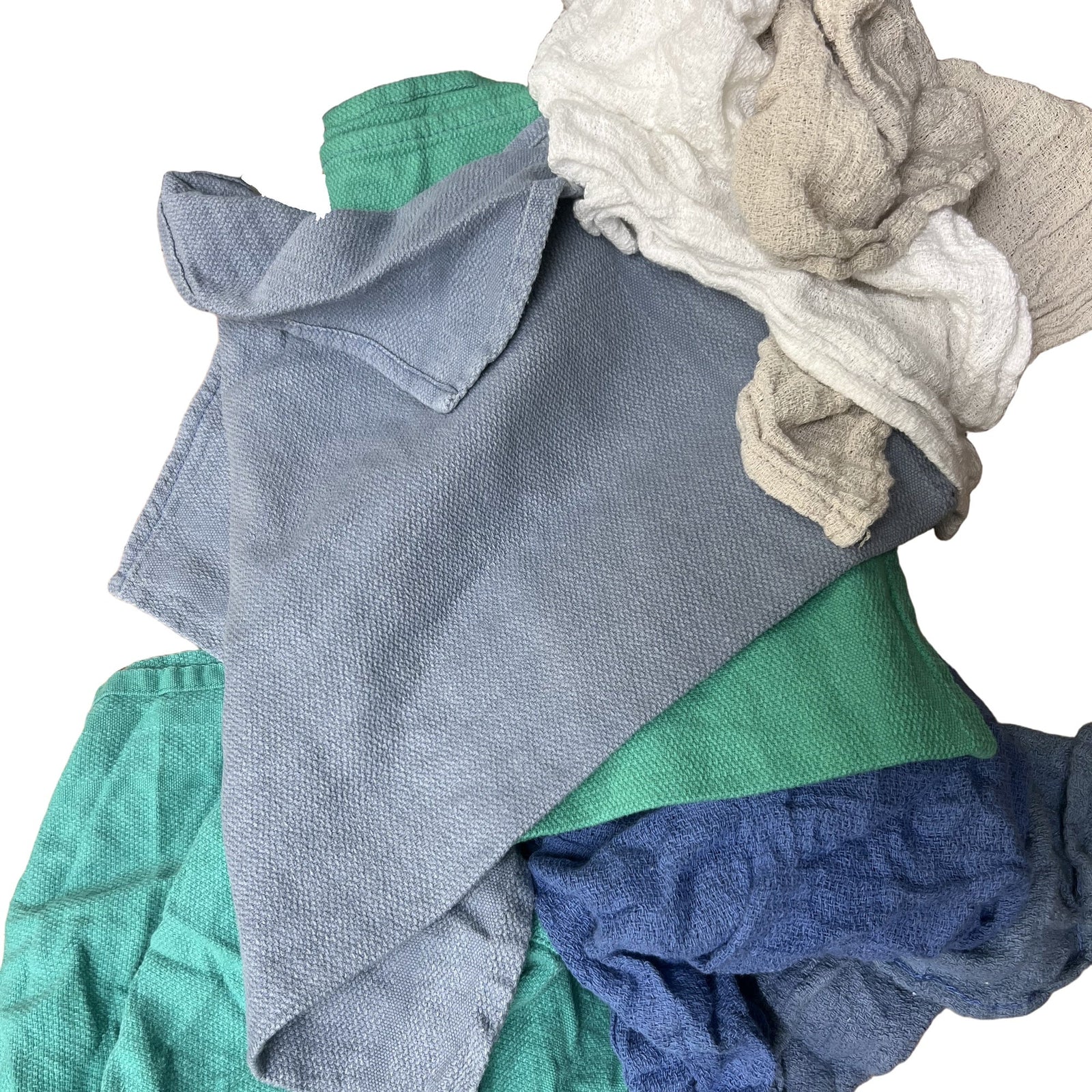

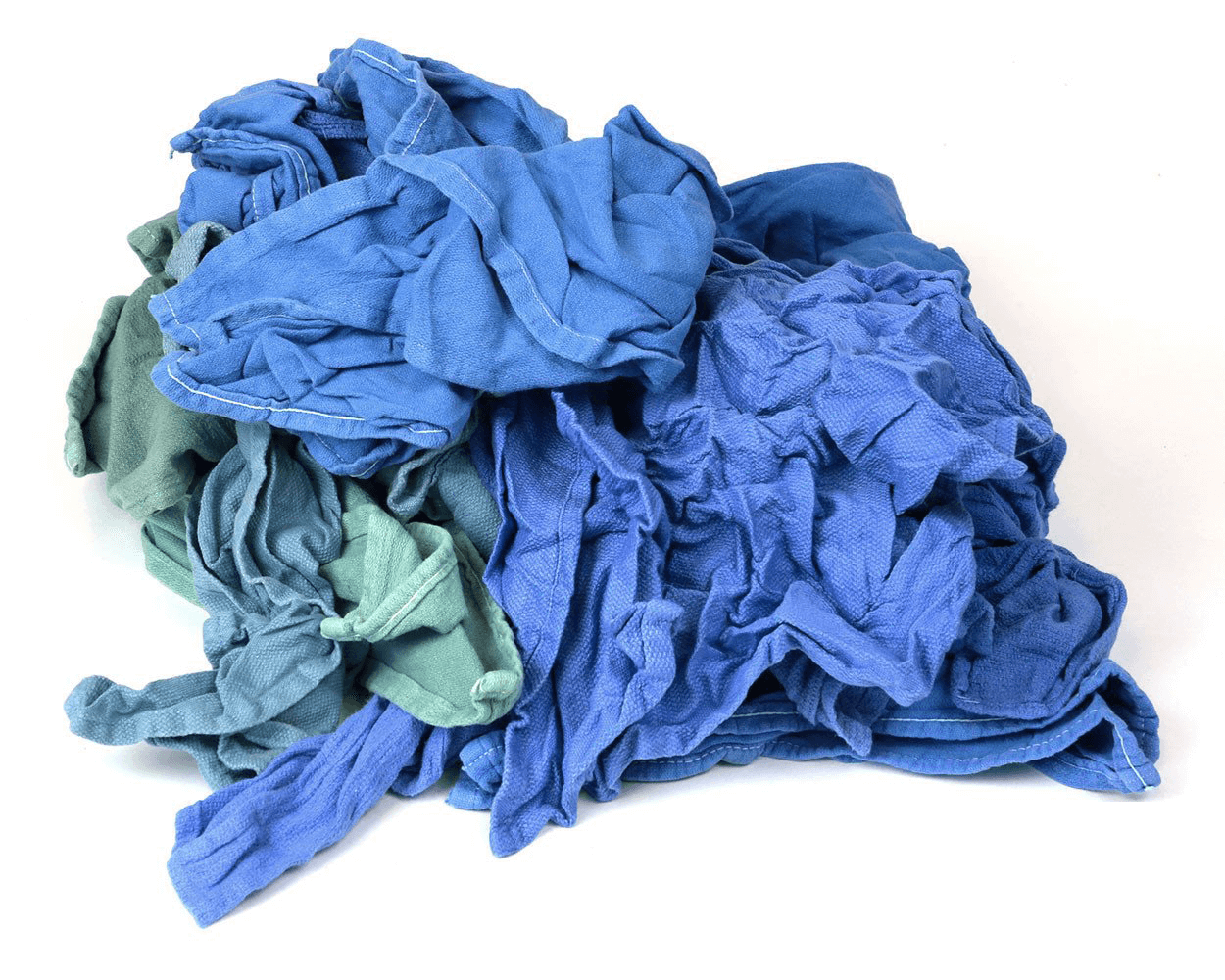

A product description can help you narrow the choices, but a sample lets you see how a rag handles your actual work. Before ordering a full box, compare samples on one normal, approved task and write down what you notice.
You do not need a laboratory setup or a complicated scoring system. You need a clear job, comparable conditions and a few useful observations.
Start with the job, not the fabric
Choose one task you already perform safely, such as an approved routine wipe-down of a work surface. Write down the surface, the material being removed and the result you need. A rag that works for a general cleanup may not meet the requirements of another job.
Follow your workplace procedures, product labels and safety data sheets. Do not introduce unfamiliar chemicals or try a sample on a delicate finish without authorization. This exercise is not a chemical-resistance test or a guarantee of surface compatibility.
Look at the clean sample first
Before use, note the piece size, thickness, edges and how the rag feels in your hand. If you have several clean pieces of the same type, compare them. Are the differences important for the way your team folds, grips or reaches with a rag?
Write down observations rather than assuming every piece in a future box will be identical. A small sample cannot establish the consistency of an entire shipment. Ask about any product characteristic that matters to your process before you order.
Our Reclaimed Huck Rags are one option to consider alongside the other materials in our reclaimed rags collection. Start with your task requirements rather than choosing by appearance alone.
Compare under similar conditions
When comparing two options, use a separate clean piece of each on comparable areas during the same approved task. Keep the surface, normal cleaning method and amount of work as similar as practical. Do not deliberately create a spill or increase a chemical concentration to make the comparison harder.
Notice how easily each piece folds and stays in your hand, how it takes up the liquid normally present and whether the surface reaches your usual acceptance standard. Record the conditions too: a different surface or amount of residue can change the result.
Use a simple sample scorecard
Complete one column for each sample. Use plain observations, not invented performance ratings.
| What to record | Your notes |
|---|---|
| Intended task and surface | ____ |
| Clean-piece size, thickness and variation | ____ |
| Grip, folding and ease of handling | ____ |
| Liquid pickup during normal use | ____ |
| Surface result against your usual standard | ____ |
| Questions to resolve before ordering | ____ |
A note such as “easy to fold, but too bulky for this corner” is more useful than simply writing “good.” Keep the comparison focused on the job you chose. Do not treat a good result as proof that the rag suits every chemical, surface or application.
Turn your notes into a buying decision
Choose the option that meets your task requirements, then check the product page for available pack options. If neither sample fits, explain what fell short before trying another material.
This comparison helps you choose a rag; it does not estimate monthly demand. For that next step, use our monthly rag-usage worksheet.
Want to try a rag before ordering? Call (585) 786-7401 to request a free sample. Browse and order online from Quick Rags Supply, or pick up at 470 Hollenbeck St, Rochester, NY 14621.