

If you're paying a rental company every week for shop towels, here's the short answer: buying your own towels or rags can cost less, but only your own contract and invoice can tell you for sure. Renting gets you route service and laundering. Buying gets you control over what you pay, how much you stock and when you stop, and your towels don't go back into a shared rental laundry. This guide shows you how to compare the two using your own numbers.
How a shop towel rental program works
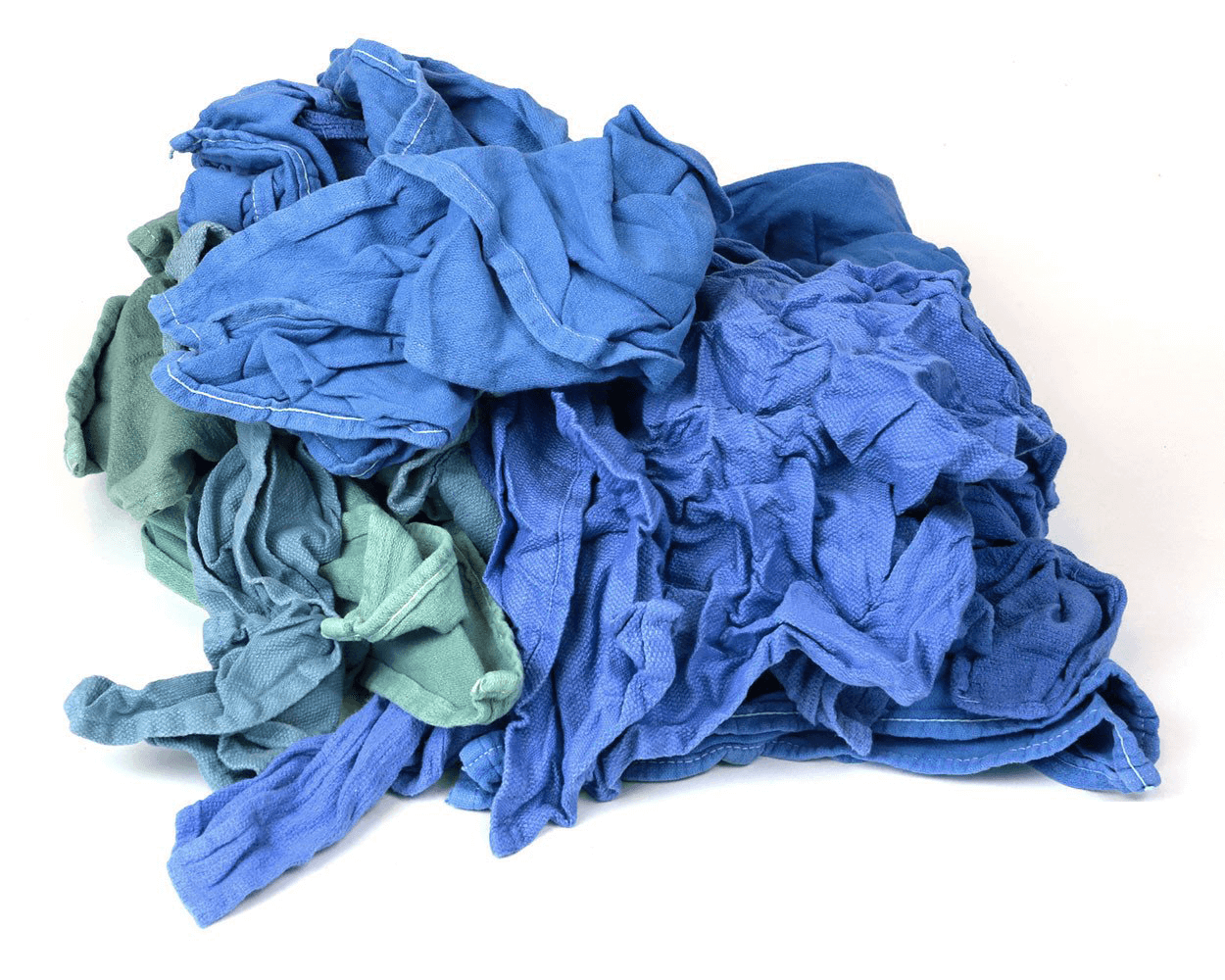
Cintas, UniFirst and Vestis describe a similar routine on their own websites. A route rep comes to your shop on a set schedule, often weekly, picks up your dirty towels, drops off clean ones and takes the dirty ones back to be laundered. Vestis says its rep also checks towels for wear and adjusts your inventory. You don't own the towels. You pay for the service.
That convenience is real. If you never want to think about towels, rental is built for you. The question is what you're paying for it, and what it costs to leave.
What's in a rental contract
Terms vary from company to company and from contract to contract, so read your own. One example is public: a Cintas facility services rental agreement (in that case, for floor mats) that an Illinois township posted on its website. The 2021 agreement included these terms:
- Term length: 48 months from installation.
- Automatic renewal: the agreement renews for the same period unless the company gets written notice at least 60 days before it expires.
- Price increases: the company can raise prices. The customer can reject an increase, but then the company may end the agreement.
- Extra charges: a weekly minimum charge, plus a "service charge" that the agreement says helps pay fluctuating costs, including costs related to the environment, energy, and service and delivery. Those charges can be adjusted with notice, and the notice can come on an invoice.
- Lost or destroyed items: the customer pays the current replacement value for items that are lost or destroyed.
- Leaving early: the customer pays the greater of 50% of the average weekly invoice times the weeks left in the term, or the replacement value of the products assigned to them.
Price-increase terms have been tested in court, too. Vestis, the company formerly known as Aramark Uniform Services, reported in an SEC filing that customers of its subsidiary AmeriPride filed a class action in 2022. The suit alleged that AmeriPride raised prices without the notice its service agreements required. The case settled for $3.1 million, and a federal court gave final approval on May 6, 2025.
None of this means your contract has these terms. It means the fine print deserves a careful read before your next renewal date.
Where have your rental towels been?
With a rental program, you don't control where the towels have been before they reach your shop. In a peer-reviewed study published in 2013, researchers at the consulting firm Gradient wrote that commercial laundries apparently wash shop towels from different workplaces together. They tested freshly laundered rental shop towels from 54 companies in the U.S. and Canada and detected metals, including lead, in nearly every sample. The study's health estimates rest on assumptions about how much metal moves from towel to hand to mouth. A 2014 peer-reviewed assessment commissioned by TRSA, the textile services trade group, tested towels from 10 laundries. It also found trace metals but concluded the estimated risks to workers were below regulatory benchmarks.
The health question is disputed. This part isn't: towels you buy aren't collected and pooled with other shops' towels after you use them. Disposable shop towels come new from the case, and the product pages for our Reclaimed White Half Terry Towel Rags and Reclaimed Huck Rags describe them as pre-washed.
How to compare your rental invoice: a checklist
Grab your contract and your last three months of invoices.
From your contract:
- Write down the start date, the term length and the date it renews.
- Find the renewal notice deadline (how many days before renewal you have to give written notice) and put that date on your calendar.
- Read the early-termination section. Write down how a buyout is calculated.
- Look for terms on price increases and how you're notified.
From your invoices:
- List every line item, not just the towels: towel charges, minimum charges, service, delivery, energy or environmental charges, lost or replacement charges, and anything else.
- Add up the towel-related charges for each week and average them. That's your weekly rental cost.
- Count how many towels you actually use in a week. The number of dirty towels picked up each week is a good count. That's your weekly towel use.
- Divide: weekly rental cost ÷ weekly towel use = what you pay per towel used.
For buying, do the same math:
- Price of a box or case ÷ pieces or sheets in it = cost per towel. Our Blue Shop Towels come 4 six-packs to a case, with 330 sheets in each six-pack, so 1,320 sheets in a case. Our Extra Thick Disposable White Rags come 6 boxes of 200 sheets, so 1,200 sheets in a case. Cloth rags are sold by the pound, so count the pieces in your first box, or start with a sample.
- Add what buying costs you that rental includes: shipping if you pay it, storage space, the time to reorder, and handling used towels (see below).
- Compare the two per-towel numbers, then compare the cost of leaving your contract early with the cost of waiting for the renewal date.
Sometimes rental wins this math. That's fine. Now you know what you're paying for.
What you take on when you buy
Buying isn't free of work, and you should know that before you cancel anything:
- No route service. Nobody shows up with clean towels. You order, receive and keep stock on the shelf.
- Storage. You need room for boxes or cases.
- Used towels are your job. Oily or solvent-soaked rags can be a fire hazard. OSHA's flammable liquids standard (29 CFR 1910.106(e)(9)(iii)) says combustible waste must be kept to a minimum, stored in covered metal containers and disposed of daily. In an interpretation letter, OSHA explained that putting the waste into a covered metal container at or near where it's made can count as daily disposal.
- Solvent-soaked wipes need extra care. Rules for solvent-contaminated wipes vary by state and town, and some wipes may count as hazardous waste. Follow your local and state laws, check the solvent's safety data sheet, and ask your waste hauler or your state environmental agency before you throw any out. When in doubt, keep them out of the dumpster.
- Laundering is optional, not automatic. If you want to reuse cloth rags, you need a way to wash them. If you don't, disposable towels or single-use rags may be the simpler choice.
What to buy instead
Match what you buy to how your shop uses towels:
- Disposable shop towels for the counter, the tool cart and quick wipes: Blue Shop Towels and Extra Thick Disposable White Rags, or see the full paper products collection.
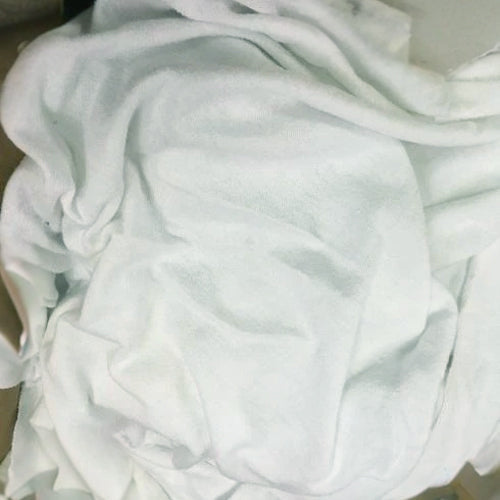
- Towel-style cloth rags if you liked the feel of rental towels: our Reclaimed White Half Terry Towel Rags are cut from full-size terry towels, pre-washed and sold in 10, 25 and 50 lb boxes.
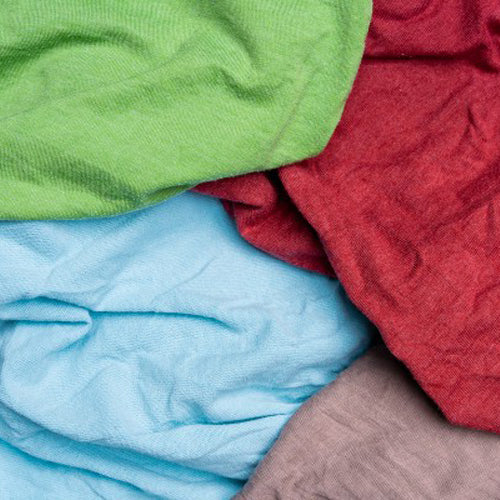
- Cloth rags for high-volume wiping in the bays: Color Cotton T-Shirt Rags for oil and grease, or Reclaimed Huck Rags, which run about 8 to 10 pieces per pound. Browse every type in the reclaimed rags collection.
Not sure how much to order? Our guide How Many Pounds of Rags Does a Shop Use a Month? helps you estimate, and How to Test a Rag Sample Before You Buy a Full Box shows you how to try a rag before you commit.
Ready to run the numbers?
Pull your last rental invoice, do the checklist above, and price the same week's towels with us. Current prices are on each product page. Order online at quickragsupply.com or pick up at 470 Hollenbeck St, Rochester, NY 14621. Quick Rags Supply ships anywhere in the USA, and free shipping is available in the continental USA, excluding Alaska and Hawaii. Questions or a free sample: call (585) 786-7401 or email office@quickragsupply.com.